
Series A Gives You Cash, Not Clarity
You just raised your Series A – a huge milestone. Take some time to celebrate! The press release is out; the wire hit the bank. You feel rich, but you’re actually in the most dangerous phase of your company’s life.
The survival mentality of the early days is gone, replaced by investor expectations. While early wins come from networks, hustle, and a lot of one-off selling, this isn’t sustainable as you scale.
This is Why You Invest in Marketing
I was on the inside of a company with low double digit revenue. Everyone knew what the product did (features), but when asked who the target audience was, what their pain points were, and how the product solved those problems, the team couldn’t articulate it. Or everyone had a different answer. This is a classic positioning problem.
Sales should not be inventing the story on every call. Redoing every sales deck to tailor it to the customer needs. Marketing sharpens positioning, messaging, and proof points so deals move faster and reps don’t freestyle the value prop.
Marketing is Fuel for Sales

At Series A, marketing refines the value prop, or how your product uniquely solves a buyer problem. It creates collateral, decks and tools to enable sales to sales for faster lead identification and shorter sales cycles.
Founder-led marketing isn’t scalable, so a dedicated resource is essential. Don’t hire a fancy CMO. Don’t hire junior marketers. You need someone who can set strategy and roll-up their sleeves to get the work done.
Who to Hire
When founders realize they need marketing, they usually make one of two hires:
The Junior Marketer: You hire someone cheap to handle social media, website and sell sheets. But because they don't know strategy, you end up managing them. Congratulations, you just bought yourself a new part-time job.
The Chief Marketing Officer: You hire a seasoned executive from a public company. They spend the first 90 days "listening" and building a deck. Then they ask for a $500k marketing budget and a team of five. You can't afford any of that.
Enter the Fractional Marketing Director
At Series A, you don't need a permanent executive; you need a temporary architect.
This is where a Fractional Marketing Director fits. You get the brain of a VP for the price of a mid-level manager.
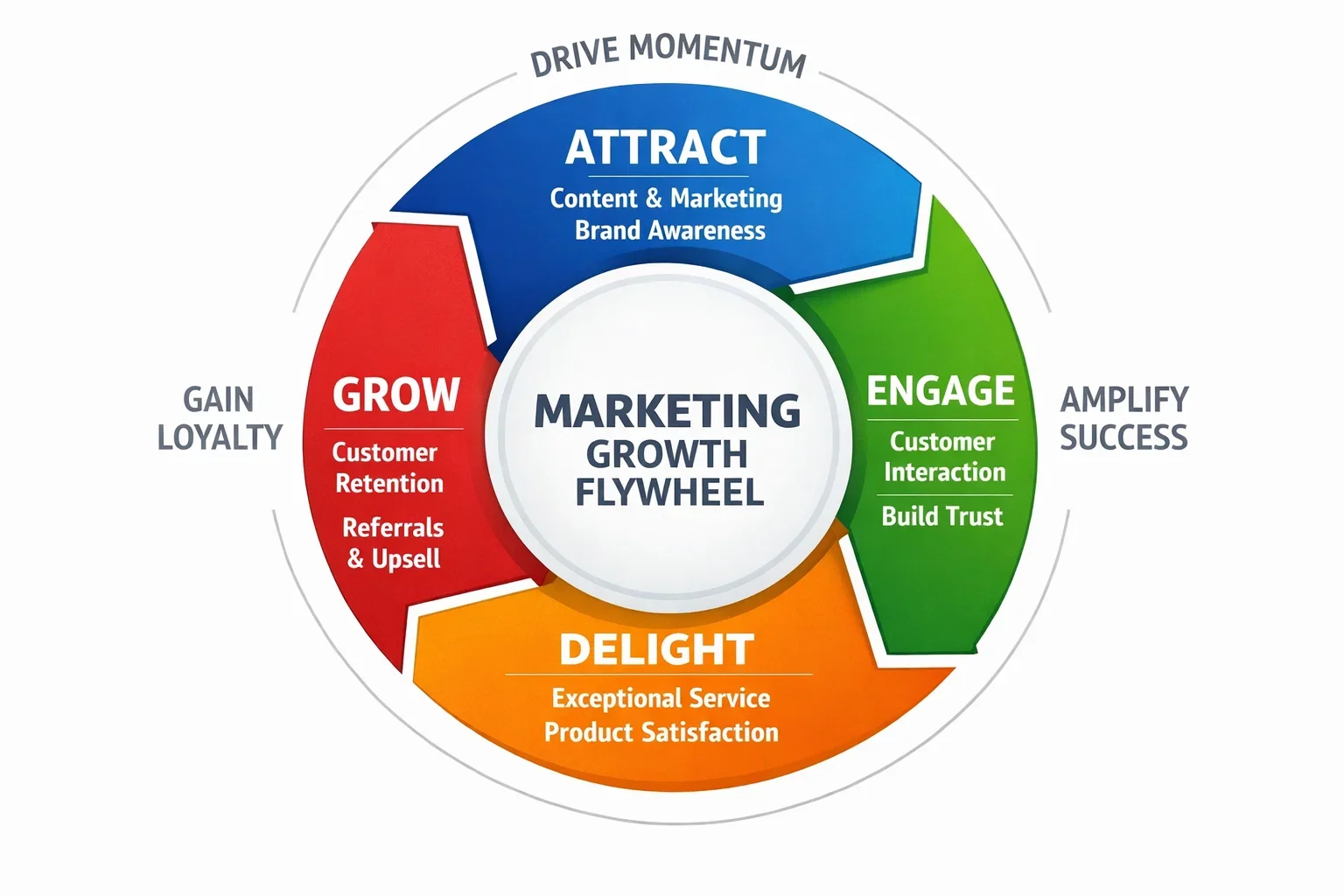
They are "Senior Doers": They have extensive experience in strategy but are still scrappy enough to get your marketing flywheel spinning. This is a term I learned at P&G and I love it because it’s the opposite of the traditional sales funnel. A funnel is linear; you pour money into the top to squeeze customers out of the bottom, and when you stop, the customers stop coming. A flywheel is circular; it takes effort to get it moving, but once it's spinning, a happy customer becomes the force that attracts the next customer. The goal isn't just to 'buy a lead'—it's to add momentum to the wheel so your growth eventually sustains itself.
A good fractional leader isn't trying to keep their job forever. They come in, set up the attribution, clarify the messaging, build the playbooks, and then help you hire a full-time manager to run the engine they built.
The Great Filter
Series A is the great filter. It separates the companies that built a cool product from the companies that can make it a real business. Series A doesn’t reward potential anymore. It rewards clarity, discipline, and repeatability. Funding buys you time, and marketing creates the fuel for what happens next.
Elishaa Batdorf is a seasoned fractional marketing director who helps B2B startups scale by providing leadership, strategy and execution. With 20 years of experience, she builds scalable, AI-enabled marketing operations to drive revenue and profit.
